Your cart is empty.

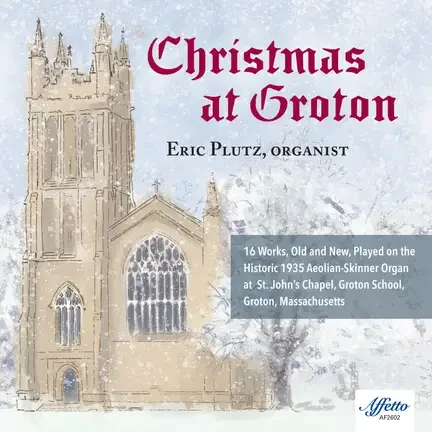
The choice of the Groton School Organ is historic. Much like architecture, organ building vacillates between periods of exuberance and restraint. Also like architecture, some organs so fundamentally alter the tastes of a generation that they become prototypes, widely imitated. When any artwork is so seminal in impact, it can be hard to see it for the revolutionary example it once was. Sitting down to the Groton Aeolian-Skinner is just such an experience. Finished in late 1935, Groton instituted a new style for American organbuilding. In the first third of the 20th century, American builders were engrossed in suggesting the symphony, either through imitations of orchestral tonalities (Tubas, French and English horns) or in the broader sense of having the organ suggest the sweep and force of the modern symphony.
2026, Affeto Recordings
Duration: 1 hour, 18 minutes